Few things are more frustrating than a door that won’t stay shut. You close it, and it drifts back open, or you have to slam it or lift the handle to get it to catch. For exterior doors, this goes beyond annoyance, since a latch that doesn’t catch leaves the door unsecured.
When a door lock is not latching, the latch bolt usually isn’t lining up with the hole in the strike plate on the door frame. Loose hinge screws, a sagging door, a shifted strike plate, a door that has swollen in humid weather, or thick weatherstripping can all cause that misalignment. Other times, the problem sits inside the lock itself, such as a sticky, dirty, or worn latch mechanism. Finding where the latch misses the strike plate points you to the right fix.
Match What You Notice to the Likely Cause
Most latching problems leave clues. This table matches common signs with the likely cause and the usual fix:
| What You Notice | Likely Cause | Usual Fix |
| Door only latches when you lift or push the handle | Door sagging on its hinges | Tighten or replace hinge screws |
| Latch hits above or below the strike hole | Misaligned strike plate | File the hole or move the strike plate |
| Door must be slammed to catch | Tight fit from swelling or weatherstripping | Adjust strike plate or thinner weatherstripping |
| Latch doesn’t pop out fully | Dirty or sticky latch mechanism | Clean and apply dry lubricant |
| Latch stays retracted or feels loose | Worn or broken latch spring | Replace the latch or lockset |
| Deadbolt won’t turn all the way | Bolt pocket too shallow or misaligned | Deepen the pocket or adjust the strike |
| Commercial door stops just short of closing | Door closer latch speed too slow | Adjust the closer’s latch speed |
How to Find Why Your Door Lock Is Not Latching
Before changing anything, find exactly where the latch is catching. It is recommended to check whether the latch is contacting the strike plate above or below the hole and how much it’s misaligned. These steps show you where the problem is:
- Close the Door Slowly: Watch where the latch bolt meets the strike plate.
- Mark the Latch: Rub lipstick, chalk, or a dry-erase marker on the end of the latch bolt.
- Close the Door Again: Turn the handle while closing so the latch touches the strike plate, then let it go.
- Check the Mark: Open the door and see where the mark landed on the strike plate.
- Measure the Gap: Note whether the mark is above, below, in front of, or behind the strike hole, and by how much.
Common Causes of a Door Lock Not Latching and How to Fix Each One
Once you know where the latch is missing, you can match it to its cause. Each cause below comes with the fix that works for it.
Loose Hinge Screws and a Sagging Door
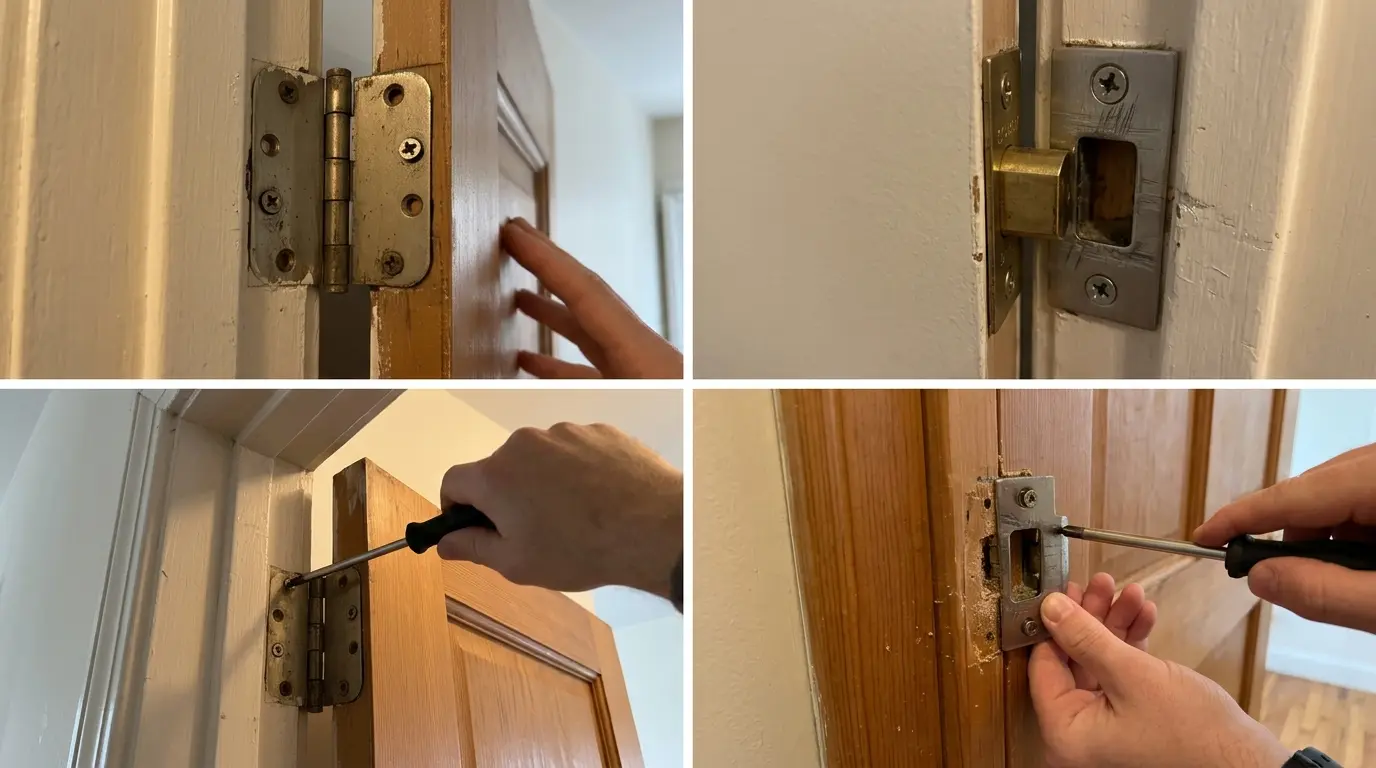
Hinge screws loosen over years of use, which lets the door drop slightly on the latch side. The latch then hits below the strike hole. These fixes lift the door back into place:
- Tighten Every Hinge Screw: Start with the top hinge, since it carries the most weight.
- Use a Longer Screw: Experts suggest replacing one screw in the top hinge with a 3-inch screw to draw the jamb closer to the stud, which can correct a sagging door.
- Fix Stripped Holes: Fill loose holes with wooden toothpicks and wood glue, then drive the screw back in.
Misaligned Strike Plate
Houses settle, and strike plates can shift or loosen over time. The fix depends on how far off the latch is. Family Handyman advises that if the latch misses the strike plate hole by 1/8 inch or less, remove the strike plate and enlarge its hole with a file. If the latch misses by more, the strike plate needs to be moved up, down, in, or out. That means enlarging the mortise, drilling new screw holes, and filling the old ones.
Swollen or Warped Door
Wood doors absorb moisture and swell, especially during humid Birmingham summers. Swelling can make a door too tight to close fully or shift the latch out of line with the strike. These steps help:
- Check the Timing: Problems that come and go with the weather often point to swelling.
- Adjust the Strike Plate: Moving or filing the strike often solves minor swelling.
- Seal the Door Edges: Unfinished or worn edges absorb more moisture and should be sealed once the door is dry.
Thick Weatherstripping
New or thick weatherstripping can push the door back just enough that the latch can’t reach the strike. Also, if the weatherstripping is the culprit behind your lock struggles, try changing to a thinner weatherstrip or adjusting the strike plate.
Sticky or Dirty Latch Mechanism
Dust, grime, and old lubricant can keep the latch bolt from springing out fully. Cleaning and lubricating the latch often solves the problem. Choosing the right lubricant matters in humid climates. Graphite powder can turn gunky in humid areas, which makes a Teflon- or silicone-based lubricant a better choice. Avoid oily sprays, which attract dirt and make the problem worse over time.
Worn or Broken Latch Spring
The latch relies on a spring to push the bolt out. When that spring weakens or breaks, the latch may stay retracted, feel loose, or fail to snap into the strike. Lubrication won’t fix a broken spring. The latch or the full lockset needs to be replaced.
Loose Lockset or Latch Screws
Loose screws on the handle or latch plate let the whole mechanism shift inside the door. Tighten the screws on both sides of the handle and on the latch plate at the edge of the door. If they won’t tighten, the holes may be stripped and need filling.
Latch Installed the Wrong Way
Most spring latches have one angled side that should face the direction the door closes. If the latch was installed backward, the flat side hits the strike plate and the door won’t catch. Flipping the latch to face the right way fixes the problem.
When the Deadbolt Won’t Extend Fully
Deadbolts need extra attention, since a bolt that doesn’t fully extend leaves the door less secure. If the bolt pocket is not deep enough or placed correctly, the bolt cannot extend fully, which can be fixed by enlarging the pocket or changing the strike plate. These signs point to a deadbolt problem:
- Key or Thumbturn Won’t Turn All the Way: The bolt is hitting the back or edge of the pocket.
- Deadbolt Only Works When You Push or Pull the Door: The bolt and strike are misaligned.
- Bolt Sticks Out Only Partway: The pocket is too shallow for the bolt’s full throw.
AFA Locksmiths’ certified master locksmiths repair and adjust deadbolts and install new locks when the existing hardware is worn or damaged.
Commercial Doors That Won’t Latch
On many commercial doors, the problem isn’t the lock. Door closers control how fast the door shuts, and the latch speed setting controls the last few inches of travel. If the latch speed is too slow, the door can stop just short of catching. The latch speed has its own regulating screw, and the manual directs installers to turn the screw nearest the latch to adjust it. Small adjustments usually solve the problem, while a closer that leaks oil or won’t hold its setting may need replacement.
Quick Fixes to Try First
Some latching problems can be solved with simple tools. Try these in order before moving to bigger repairs:
- Tighten All Hinge Screws: Loose hinges are the most common cause of misalignment.
- Tighten the Strike Plate and Lockset Screws: Loose hardware lets the latch shift.
- Clean and Lubricate the Latch: Use a dry, Teflon-based lubricant and work the handle several times.
- Do the Lipstick Test: Mark the latch to see exactly where it hits the strike plate.
- File the Strike Hole: Only when the latch misses by 1/8 inch or less.
When a Door Lock Not Latching Needs a Locksmith
Some problems go beyond a quick adjustment. These signs mean the repair needs professional tools or new hardware:
- Broken Internal Parts: Latch stays retracted, or the handle turns without moving the latch.
- Cracked or Split Door Jamb: The strike plate has nothing solid to hold onto.
- Strike Plate Needs Relocating: Latch misses by more than 1/8 inch, and the mortise needs recutting.
- Deadbolt Won’t Fully Extend: Door isn’t secure until the bolt fully engages.
- Old or Worn Locks: Aging locks often need replacement instead of repeated adjustments.
- Recurring Problems: A latch that keeps failing after adjustments may have a deeper hardware issue.
Bottom Line
Most cases of a door lock not latching come down to alignment. Loose hinges, a shifted strike plate, a swollen door, or thick weatherstripping can all push the latch out of line, while dirt or a worn spring can keep it from extending. Finding exactly where the latch misses the strike plate is the key to choosing the right fix, and deadbolts that don’t fully extend should never be ignored.
At AFA Locksmiths, we provide lock repair and maintenance, new lock installation, rekeying, and key making for homes and businesses across Birmingham, Hoover, Homewood, Mountain Brook, Trussville, Bessemer, and surrounding areas. Our certified master locksmiths are bonded, licensed, and insured, and we’re available 24/7 for lock emergencies. We also help businesses upgrade their security with keyless entry and access control systems.
Call (205) 379-8481 or get a free quote to fix a door lock that won’t latch.
Frequently Asked Questions
Why is my door lock not latching all of a sudden?
Sudden latching problems often come from loose hinge screws, a strike plate that has shifted, or a door that has swollen in humid weather. Check the hinges first, then look at where the latch hits the strike plate.
How do I fix a door that won’t latch without replacing the lock?
Tighten the hinge and strike plate screws, clean and lubricate the latch, and check its alignment with the lipstick test. If the latch misses by 1/8 inch or less, filing the strike hole usually solves it.
Can humidity cause a door not to latch?
It can. Wood doors absorb moisture and swell, which can make them too tight to close or shift the latch out of line. Problems that come and go with the weather often point to swelling.
What lubricant should I use on a sticky door latch?
A dry, Teflon-based lubricant works well, especially in humid climates, since graphite can clump when moisture is high. Avoid oily sprays, which attract dirt and gum up the mechanism over time.
Is a deadbolt that doesn’t fully extend a security risk?
Yes. A bolt that only extends partway gives much less protection against forced entry. The bolt pocket or strike plate usually needs adjusting so the bolt can extend fully.
When should I replace the lock instead of adjusting it?
Replace the lock when the latch spring is broken, internal parts are worn, or the latch keeps failing after adjustments. Old locks that stick or wobble often cost more to keep fixing than to replace.